 MEMBERSHIP LOGIN
 JOIN PRI
A New Currency for Speed Merchants
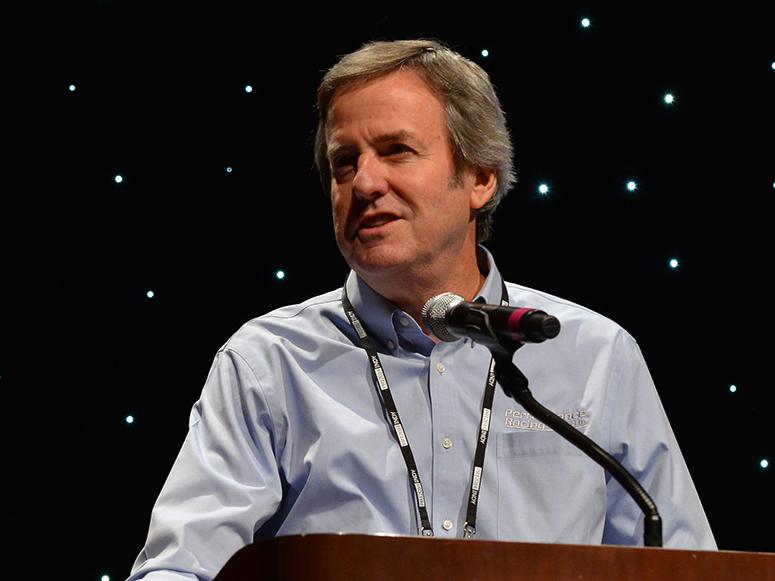
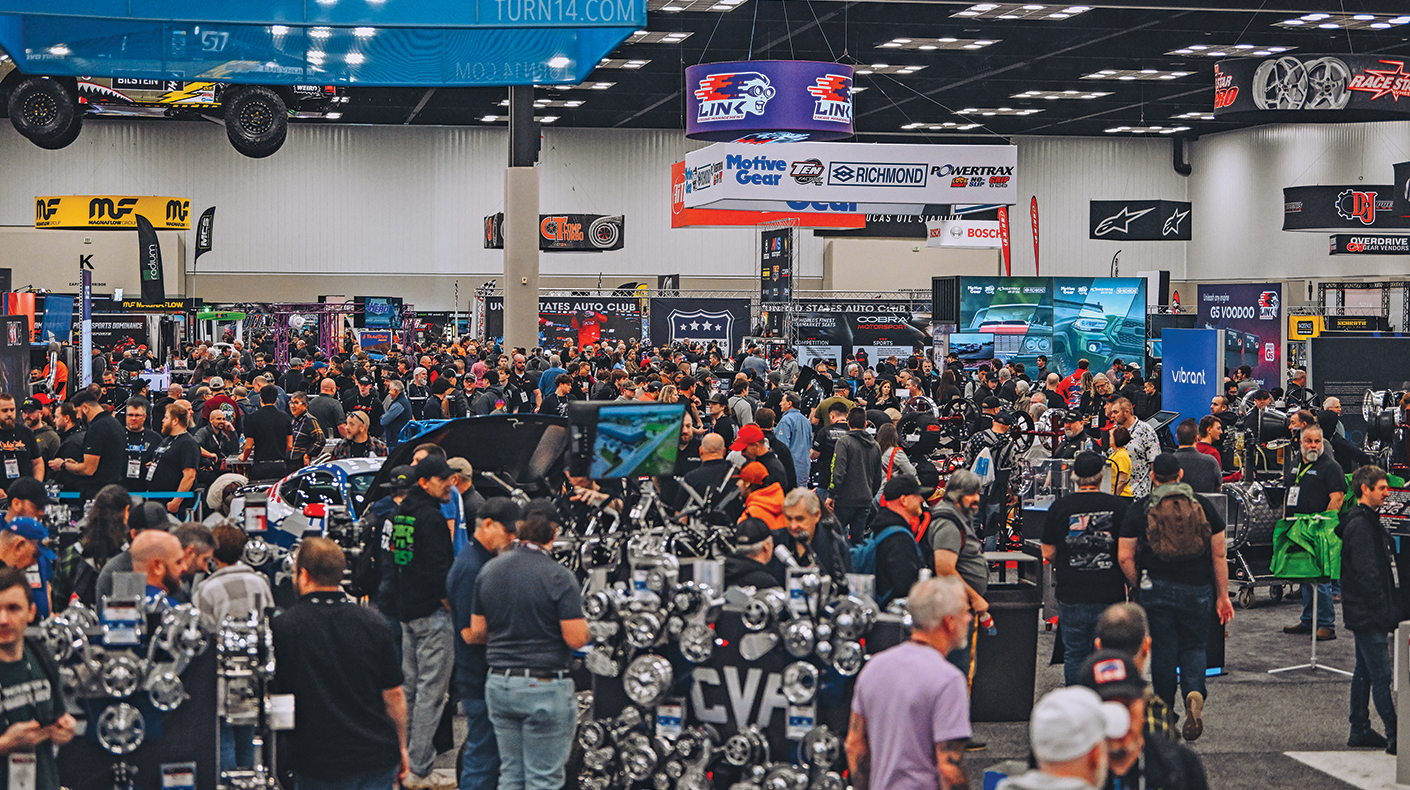
While there was plenty of horsepower on display, the real racing-industry muscle flexed at this year's PRI Show came from networking, business alliances, and collaboration. In other words, future gains on the track are not going to come from trick parts alone.
The industry is actively engineering a future path toward greater performance and opportunity, yet not without controversy. Buzzwords like private equity, acquisitions, and, of course, tariffs—terms not often uttered in a racing setting—commonly surfaced when eavesdropping on conversations. Still, there were also compelling product trends observed throughout the aisles of the Indiana Conventional Center to keep racers, fabricators, and engine builders hungry for more speed—tempered by the occasional reminder that the industry is constantly changing gears.
In this environment, gathering data and developing the fluency to interpret the numbers will be a currency just as valuable as boost. New corporate partnerships are reshaping product development and racing opportunities. Engine and fabrication shops are gravitating toward new equipment that is easier to operate and requires fewer hands. And racers who do not embrace advanced knowledge and overall critical thinking, especially with precision measurements, risk being left behind.
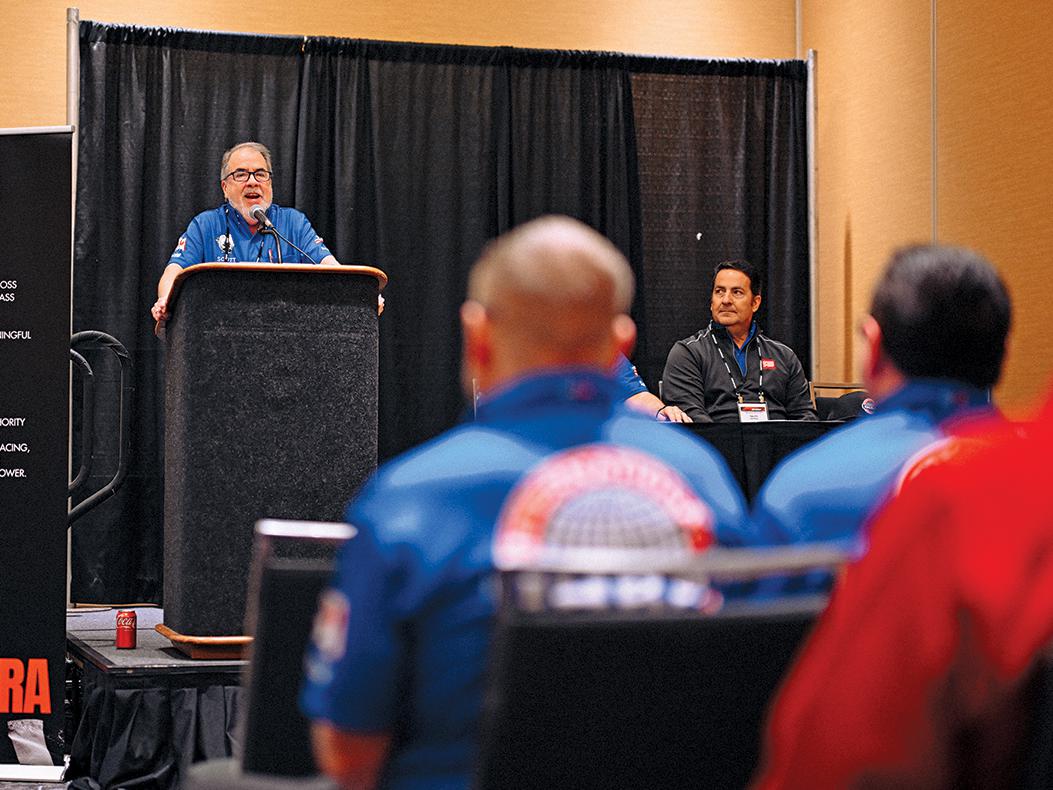
That's why seminars, networking functions, and other educational opportunities, such as the AERA-sponsored EPIC conference the day before the Show opened, have become essential to advancing motorsports.
"Things happen when you don't assemble an engine correctly or put in the right parts," said Chris Osborn of PAC Racing Springs, Southfield, Michigan, who gave one of many technical and business seminars throughout the Show. "With our Spintron and a load cell under the spring, you see the data and what's happening to that valve spring when there's extra lash or the wrong pushrod. The spring is a highly stressed part. When you have something else going on in the engine, it may show up in the valve spring."
Data Acquisition
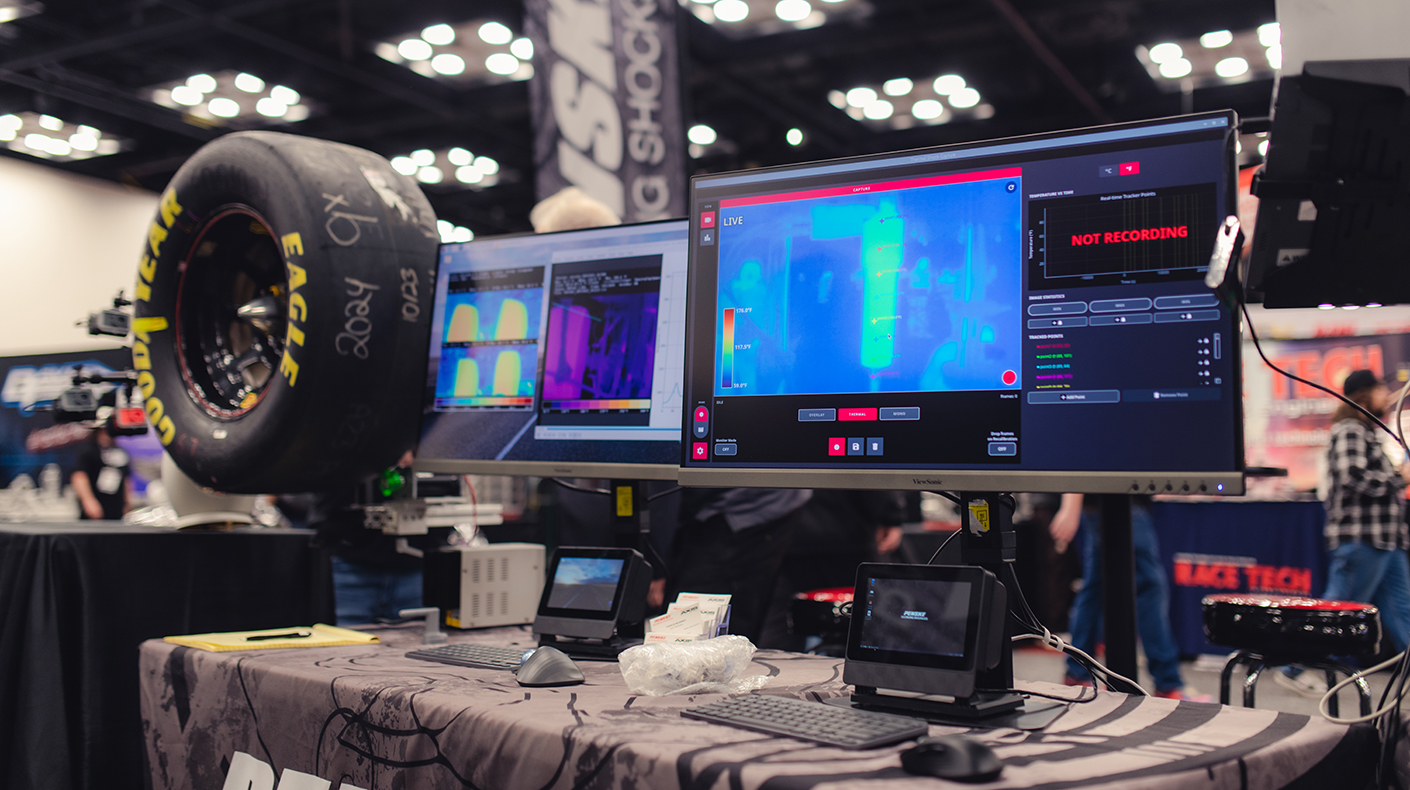
Data acquisition was also a hot topic at the Show, with Penske Racing Shocks in Reading, Pennsylvania, showing off a new four-camera system that monitors tire heat.
"It actually looks at the full temperature profile to see where the heat's propagating. It's just a better tool for the end user to understand what the tires are really doing," said Aaron Lambert. "Going back 10 years, a lot of teams and even the race series were scared of data. It was the belief that you had to have a special engineer to read data. These new systems are now cost-effective and easy to use. It really helps the teams save money. You can get to the end tune much quicker."
"We have new wheel-speed sensors and driveshaft-speed sensors since we've been getting a lot of requests for data acquisition," echoed J.C. Casio of Strange Engineering, Morton Grove, Illinois. "The 40-tooth wheels we're using give better resolution, so the teams are getting better data. Especially with drag-and-drive and no-prep styles of racing, traction control becomes critical, so the racers get a benefit with more data."
On the business side, perhaps the biggest news generator before, during, and after the Show was the International Hot Rod Association (IHRA), based in Fairfield, Ohio. The sanctioning body announced race track purchases and either launches or acquisitions of race series for stock cars, powerboats, tractor pulling, and more.
"PRI is a great platform to be able to announce and have a presence where everyone in the industry is here," said new president Leah Martin, adding that the group secured three booths and credentialed 99 people to conduct business at the Show. "IHRA is part of this industry, and we wanted a huge presence here to meet the racers and the people in the industry."
Martin said more tracks and at least one more sanctioning body will come under the IHRA umbrella, which begs the question: Is the group overextending too much, too soon?
"We are building an organizational structure to manage each team and each discipline of the sport that we represent, as well as the executive leadership that oversees all those disciplines," she replied. "It's also been great to meet with the sponsors that are here, and so we're excited to see this go forward."
Focusing on the Intake
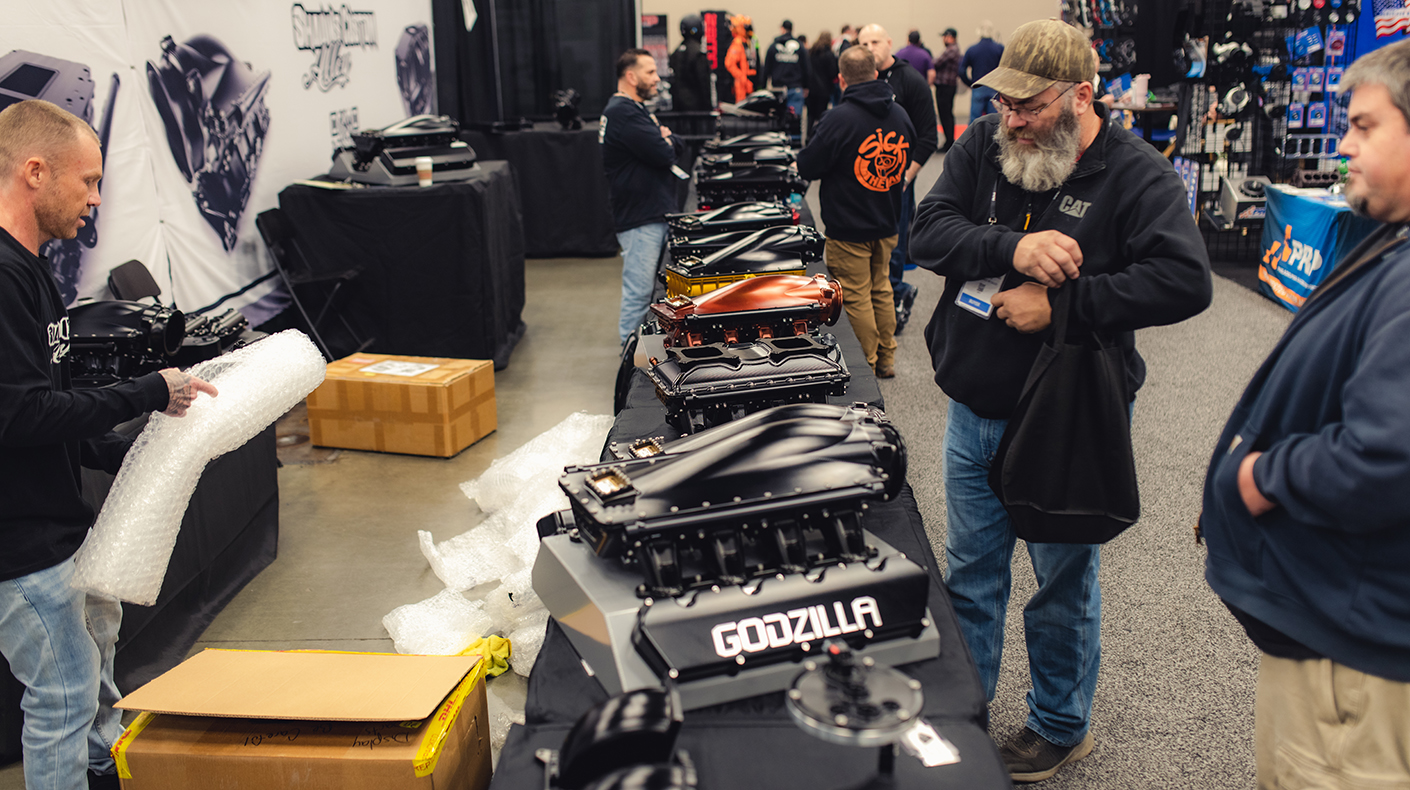
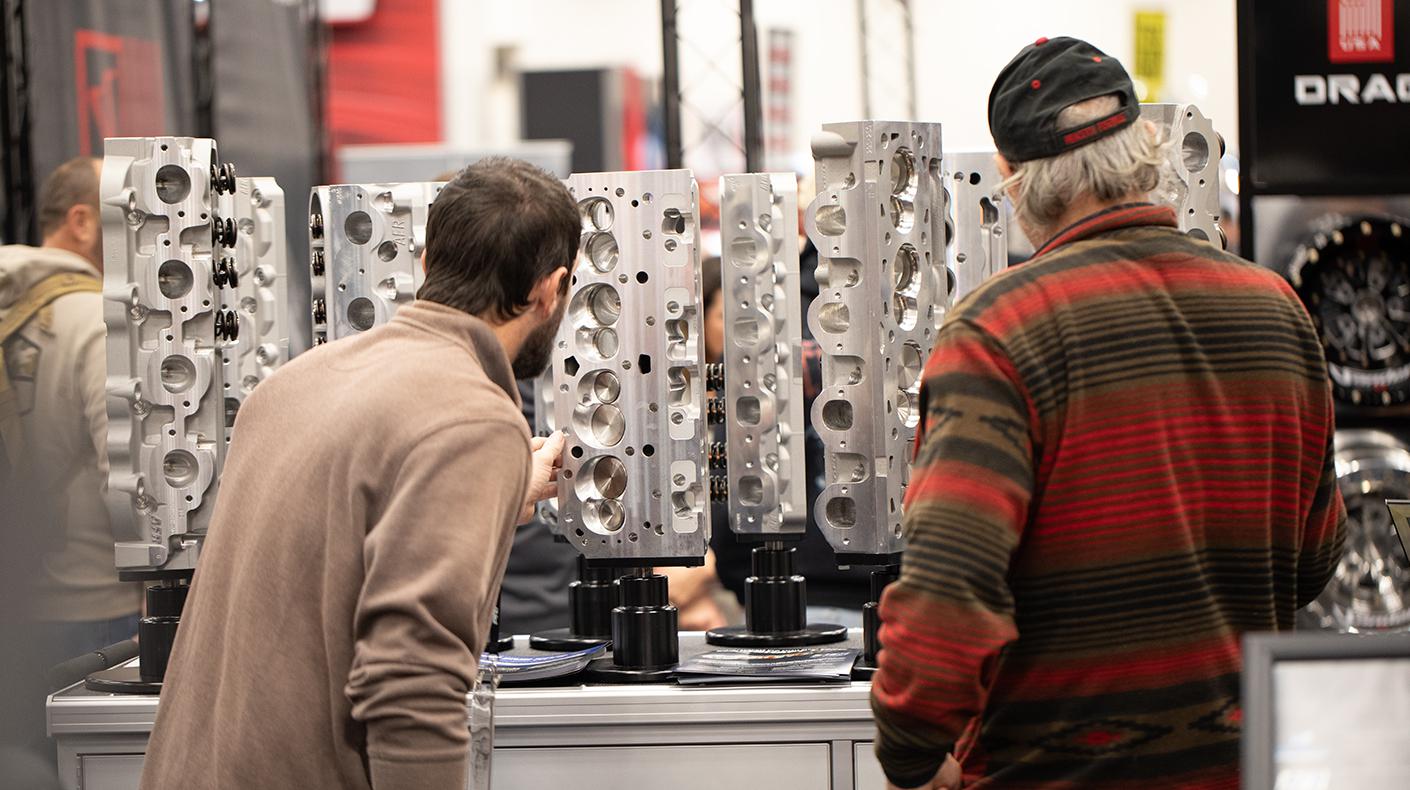
If there was a single product trend that stood out above others at the Show, intake manifolds would arguably take center stage. Mark Fretz at Brodix in Mena, Arkansas, offered a rational explanation: "We had to keep up with the head development." He showed off a new big block Chevy intake that Brodix, in collaboration with Mike Androwick of Mike's Racing Heads in Concord, North Carolina, developed using 3D-printing technology. "The cylinder head was becoming so efficient that we had to have a better intake for it."
"We needed an intake that would work better with 632-cubic-inch engines," added Androwick. "Using a 3D-printed core, we can design what we want out of the box and not have to worry about porting it. You don't have to worry about draft angles or tapers when 3D printing the cores."
"The intake manifold is very critical on every engine, particularly a nitrous motor," concurred John Partridge of Bullet Racing Cams, Olive Branch, Mississippi. "We have to look at the intake when designing a camshaft. For a while, I think the intake guys were making what they thought was best. Now they've gotten more R&D and more help from the racers and engine builders to catch up to the cylinder head guys."
With the OEMs investing heavily in composite intake manifolds, racers with late-model vehicles are looking to the aftermarket. "People are just making more power now, and if they go away from the factory plastic manifold, they may need a billet manifold," said Matthew Ramsay of Australia-based Plazmaman. "Our target audience is boosted, so we're trying to keep it lightweight but strong enough to hold boost."
Another Australian shop known for billet intakes is Shaun's Custom Alloy, which easily had the Show's longest display table for its intakes, including new MH7 designs for the Hemi platform. "It's got big, 31-mm-bore fuel rails, two fuel injectors per cylinder, big, tapered runners, burst panel on top, and dual entry throttle bodies," explained Shaun Mellish. "I've also got a new water-to-air intercooled LS."
Some new intakes were developed when engine builders couldn't source what they needed in a timely manner. Chris Uratchko of Uratchko Racing Engines, South Lyons, Michigan, had a customer who wanted a unique design for a big block Chevy engine. His design turned out to be a winner, and then other racers wanted one like it.
"There are new casting technologies that enabled me to do it," said Uratchko, whose intakes are available through a collaboration between Wilkes Performance and LGM Racing Development. "After COVID, there were manifold shortages from the big suppliers. So I decided to make something different."
Uratchko's designs have tall runners and feature a generous plenum. "This one is for a spread-port BBC. There are plenty of short-runner manifolds out there, but this one seems to be taking off in truck-puller applications, some dragster classes, and high-end nitrous. I've got a different one for 4150 and 4500 carbs, so I'm just going to keep developing them."
Working Together
As mentioned, partnerships and collaborations were found among many of the 1,600-plus exhibitors at the Show. BluePrint Engines, based in Kearney, Nebraska, announced a deal with ZF Transmissions in Northville, Michigan, and Brian Crower, Inc. in El Cajon, California, as they entered into an agreement with CP-Carrillo in Irvine, California.
"We formed a partnership with CP-Carrillo to bring high-end domestic crankshafts to market," reported Brian Crower. "There's a void right now in the high-end market. After you blow up a motor, no one wants to hear that it's 24 weeks for a crank. We'll be doing cranks for Pro Mod, and we've got cranks in the works for Top Fuel."
Over at Fleece Performance Engineering in Pittsboro, Indiana, there is not only a new billet block program, but the company entered into a partnership with AMSOIL to offer a co-branded product for the light-duty diesel market.
"To do something like this, you need to partner with someone reputable, and AMSOIL is second to none," explained John Benshoof. "We wanted to get our customers a quality product. We sell turbos, cylinder heads, race engines, and it behooves us to offer quality oil products for these customers. Believe it or not, some people will spend a lot of money on an engine and then get the cheapest oil they can find. We have our own chemistry, taking into account that we have a very specific target cost and performance."
Safety Gear
Safety in racing is not taken lightly, and numerous exhibitors showed off new race suits, gloves, restraint devices, and other safety equipment at the Show. The year 2025 is also important because it marks the launch of a new and stricter Snell SA2025 standard for helmets. With the new benchmark in place, many new helmets were introduced at the Show, including the Kingsnake from Simpson.
"The Diamondback was an iconic helmet for Simpson and needed to be redesigned for 2025," said Kevin Albino. "Rather than reiterate the same helmet, we wanted to improve the original aggressive concept. The Kingsnake was born because it ate the Diamondback and birthed this new helmet. It's available in composite and carbon fiber, and we improved the field of view."
Engine Focused
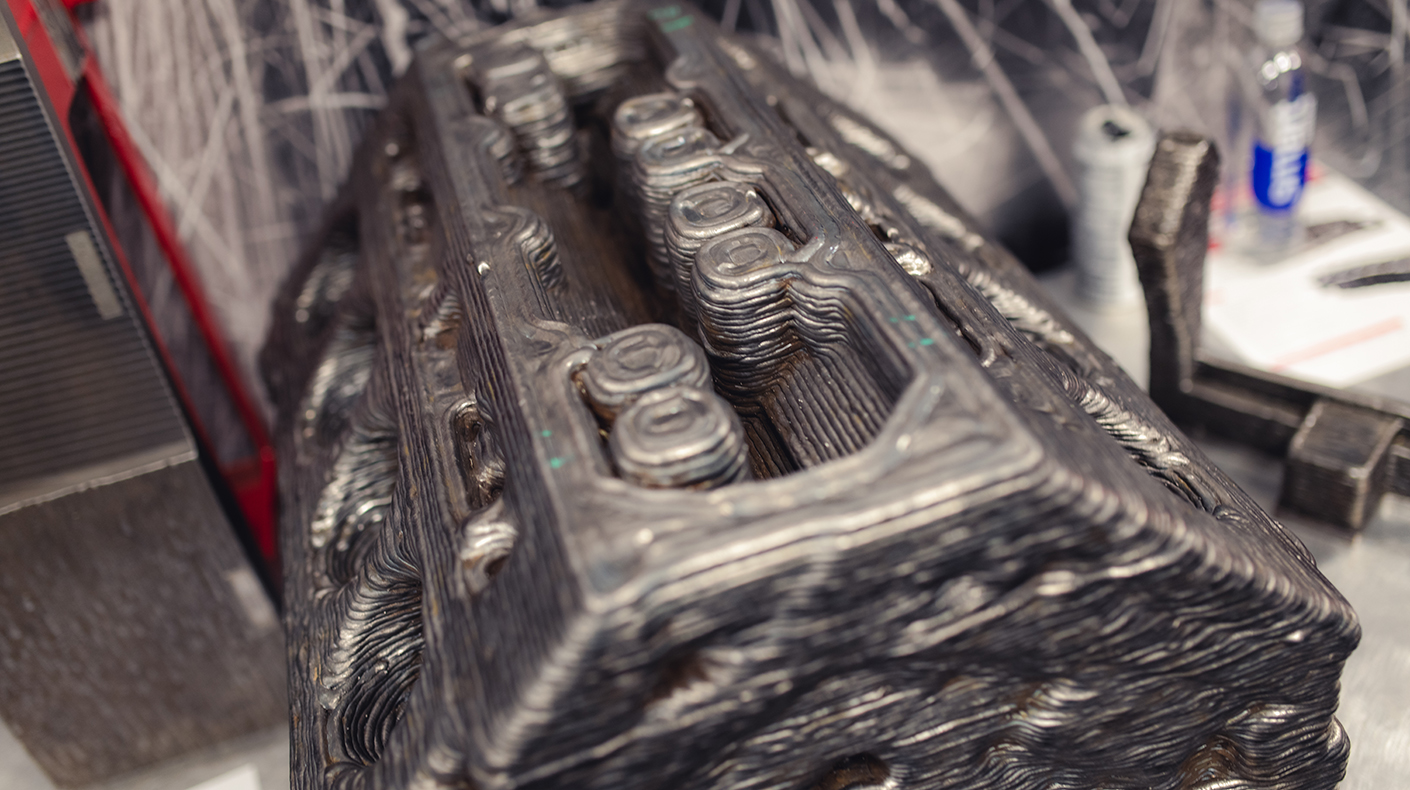
Perhaps the most jaw-dropping product seen on the PRI floor was an 800-pound, 3D-printed engine block in the Lincoln Electric booth.
"The part we have here took nine days to manufacture," said Clay Rutti, noting that the company has 26 metal 3D printers working for a variety of industry disciplines. "When you think about the time it takes to get a casting, you can send us your STEP file, and we can produce a part in nine to 10 days."
"This is based on an LS6 motor," added Craig Weisbrod. "We pulled a CAD file right off the Web. We were able to bring that into our software, model it, and go from there. We created the layers and built the print profile. It's printed with an alloy with higher ultimate strength than normal mild steel, so it's around 70,000 ksi."
Significant machining would be required to bring this metallic printing to a usable standard that could be tested and evaluated, prompting company reps to stress that the main purpose of the block is to demonstrate the unique technology and not to signal an entry into the cylinder-block market.
"We're talking to people who want to prototype parts fast or get low-volume production parts really fast," said Rutti, "compared to trying to have a casting made or going through the entire process where you'd waste a lot of material going from a billet."
Numerous new cylinder blocks were introduced at the 2024 PRI Show, and the 2025 event saw that trend continue. Brodix promised that its new LS block, with a true splayed main cap and designed for more than 2,500 horsepower, is forthcoming. Fleece has upgraded its six-cylinder diesel blocks and has a Duramax application in the works.
"We have a new LT1, LT4 tall-deck billet block," announced Bryan Neelen of Late Model Engines, Houston, Texas. "It's the first LT tall deck on the market. It's offered with standard and Cleveland mains and with a raised cam location. We feel we have the most rigid way to put water jackets into a billet block. We have near the factory cooling capacity for the drag-and-drive guys."
While there is always new technology in racing, some of the traditional paths to power continue to endure. Take carburetors, for example. They're popular with racers, either due to the rules or a desire to simplify engine tuning. Still, the carbs are definitely getting larger.
"We brought new spacers to adapt our larger carburetors down to a 4500 footprint," said Trevor Wiggins of Get'M Performance, Alvaton, Kentucky. "Normal carbs are around 2.125-inch bores, and we go up to 2.800. So, you have to adapt it back down to a 4500 opening. We also offer removable boosters and our own billet fuel bowls. Our carbs just keep getting bigger to accommodate more horsepower."
No survey of the Show floor would be complete without acknowledging the efforts to satisfy some teams' craving for boost. Superchargers and turbochargers allow engine builders to make 2,000-plus horsepower with smaller engines, fewer exotic parts, and less reliance on expensive cylinder heads. Choosing between supercharging or turbocharging may present a dilemma for some.
"It goes back to what they're comfortable with, what kind of car, and who's helping them. At this performance level, they are rarely one-man bands, so we want to know who's tuning the car," explained Roger Conley of Hart's Turbo, Fayette, Missouri, which just released a new centrifugal supercharger this year. "Maybe the engine is already set up for turbos, and maybe the car has a long front end, which suits a blower."
Hart's new supercharger took more than three years to develop. "There's a huge demand for a more durable product, so the challenge was building a product with a lot of power that's also durable," he added. "We use a pressure-fed oil system through the bearing to draw heat away. That helps it live through high loads and boost pressures."
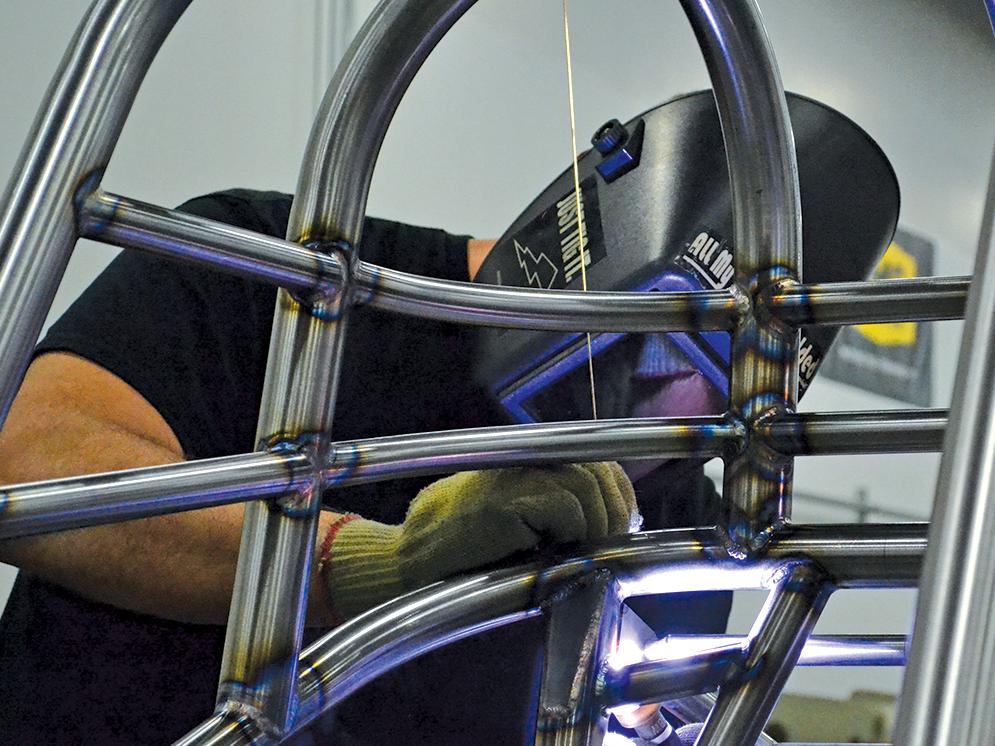
Meanwhile, Stainless Headers showed off a pair of fabricating stations dedicated to building exhaust systems. "We get a lot of questions about the best ways to cut stainless steel, how to back purge, and other ways to fabricate," explained Steve Zimmerman, who also brought a unique 8-into-1 header collector that's proven popular with jet boats and sand rails. "We designed a setup for the home builder with simple, budget-friendly equipment. And we also did a pro station with higher-end equipment to meet those fabrication needs.
"Whether it's access to education or rising costs," summed up Zimmerman, "we're seeing more and more home builders coming into the industry."
Throughout the Show Halls
The off-road industry showcased its products in a special Hammertown exhibit area with numerous manufacturers displaying wares that can withstand the unique challenges of the desert and rock trails.
"The off-road industry continues to be more organized, and it's still a growing segment with KOH, Ultra4, and other different organizations coming together to build better race programs. I see a bright future for off-road," said AJ Grasso of Radflo Suspension Technology in Fountain Valley, California, which released a new internal-bypass shock at PRI. "It's been a big game-changer for teams moving away from standard coilovers. We're showing increased speeds of 10 to 30 mph over what they currently run."
Getting to the track is also becoming easier, as demonstrated by the latest in race-trailer and tow-vehicle trends on display in the huge exhibit area located on the field of the Lucas Oil Stadium adjacent to the Indiana Convention Center. Tow rigs are more powerful and provide spacious living quarters, while trailers are more functional.
"We brought a new Renegade 17-foot box on a 589 Peterbilt, all custom white-out package that's new to the industry," said David Sheahan of Capitol Custom Trailers & Coaches, Beltsville, Maryland. "It's 605 horsepower with 1,850 lb.-ft. of torque. The toter home has bunk beds on the inside, full refrigerator, full bathroom, and lots of living space. Behind it right now is a 40-foot trailer. We've been seeing really good sales on toter homes."
Finally, advancements in manufacturing are helping both the DIY racers as well as established shops. Last year, Rottler in Kent, Washington, introduced its F10XS with advanced automation, and it's now just getting into the market.
"This is a consolidated boring and surfacing machine that's great for the small engine builder," said Bud Keating. "It's more productive because of the automation. He can bore and surface by himself and walk away from the machine. He doesn't need another employee." Experienced or qualified workers may be hard to find, he added. "Our customers are looking to supplement that with automation. They work on a broad range of blocks and heads, and we've had to expand, too."
To read the full article, plus hundreds of other articles like it, for free, sign up for a digital subscription to PRI Magazine on Zinio here.
Once you download the Zinio mobile app or are logged into Zinio on a desktop browser, you will gain immediate access to more than a year's worth of content, including "A New Currency for Speed Merchants" here and additional coverage in the January/February 2026 issue here.